What Is Customs Clearance?
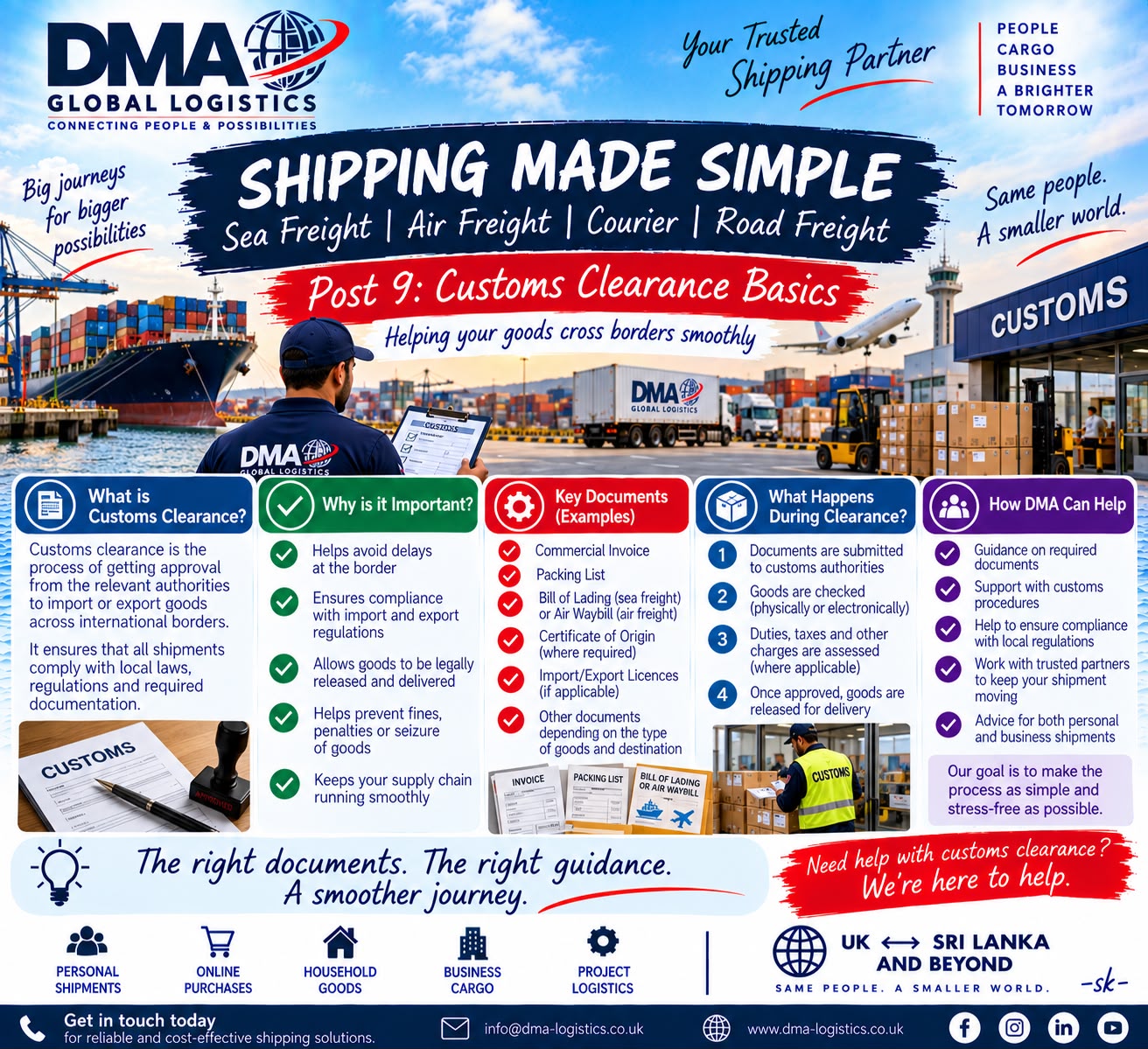
Customs clearance is the process of obtaining the relevant customs authority's permission to import or export goods across an international border. The process can involve declarations, document checks, inspections, duty or tax payments and other regulatory checks.
Whether you are sending personal belongings, gifts or commercial cargo, your shipment may need customs formalities in the exporting country, importing country or both.
Why Is Customs Clearance Important?
Customs clearance helps ensure that goods move legally and that the correct information is provided to border authorities.
Common Customs Documents
Document requirements vary by the type of shipment, destination and customs procedure. Depending on what you are sending, you may need:
Commercial Invoice
Describes the goods, their value, sender, recipient and other information used for customs assessment.
Packing List
Shows the packages, contents, quantities, weights and dimensions of the shipment.
Bill of Lading or Air Waybill
Transport documents associated with sea freight or air freight movements.
Certificate of Origin
May be needed to establish the origin of goods or claim applicable preferential treatment.
Import or Export Licences
Some regulated products require licences, permits or approvals before they can move across borders.
Additional Supporting Documents
Proof of value, product certificates, identification or other records may be requested depending on the cargo and destination.
What Happens During Customs Clearance?
Submit Shipment Details
The required import or export declaration and supporting documents are submitted to the relevant authorities.
Review or Inspection
Customs may assess the declaration and examine the goods or supporting documents, either electronically or physically.
Duties and Taxes
Where applicable, import duties, VAT and other charges are assessed and must be dealt with before release.
Clearance for Delivery
Once all relevant conditions are met and clearance is granted, goods can proceed to the next delivery stage.
The sequence can vary depending on the route, customs procedure, shipment category and authority requirements.
Are Customs Duties and Taxes Always Payable?
No. Whether charges apply depends on the country, type of goods, customs value, origin, purpose of import and applicable reliefs or exemptions. Being sent as a gift or for personal use does not automatically make an item exempt.
For goods entering Sri Lanka, the amount payable is determined under the applicable Sri Lankan rules and customs assessment. Ask about the expected shipping and customs costs before sending valuable or commercial goods.
Common Reasons for Customs Delays
Incomplete Documents
Missing invoice details, packing lists or supporting documents can lead to extra queries.
Incorrect Descriptions or Values
Vague item descriptions, inaccurate valuations or wrong classification can result in checks or reassessment.
Restricted Goods
Certain products are controlled, need permits, or may be prohibited from import or export.
Unpaid Charges or Inspection
Outstanding duties, taxes or a physical inspection can delay the release of cargo.
How to Prepare for Customs Clearance
- Describe the contents of each package clearly and accurately.
- Provide realistic values and retain purchase receipts where relevant.
- Check whether the goods need permits, licences or special handling.
- Prepare the correct recipient and delivery details.
- Keep your invoice, packing list and other shipping documents consistent.
- Allow time for possible customs inspection or clarification requests.
- Confirm who is responsible for paying duties, taxes and any handling charges.
Frequently Asked Questions
Do personal parcels need customs clearance?
They may. Customs declarations and import rules can apply to personal parcels and gifts as well as business shipments.
Does paying for freight include customs duties?
Not necessarily. Freight charges and import duties or taxes are different costs. Confirm what is included in the quotation.
How long does customs clearance take?
There is no universal timeframe. Document accuracy, inspections, cargo type, local procedures and workload can affect how long it takes.
Can I send any product internationally?
No. Restrictions and prohibitions differ by country and transport method. Check requirements before shipping.
Support for UK to Sri Lanka Shipping
DMA Logistics can guide customers through the information typically required for shipping and assist with the relevant customs process through its available services and logistics partners.
Customs decisions, duty assessments and release approvals remain with the relevant authorities. Exact services and responsibilities should be confirmed for your shipment.
Need Help With Customs Clearance?
Whether you are sending personal parcels, household items or business cargo, DMA Logistics can help you understand the shipping requirements from the UK to Sri Lanka and beyond. Tell us what you plan to send and where it needs to go.