What Is Road Freight?
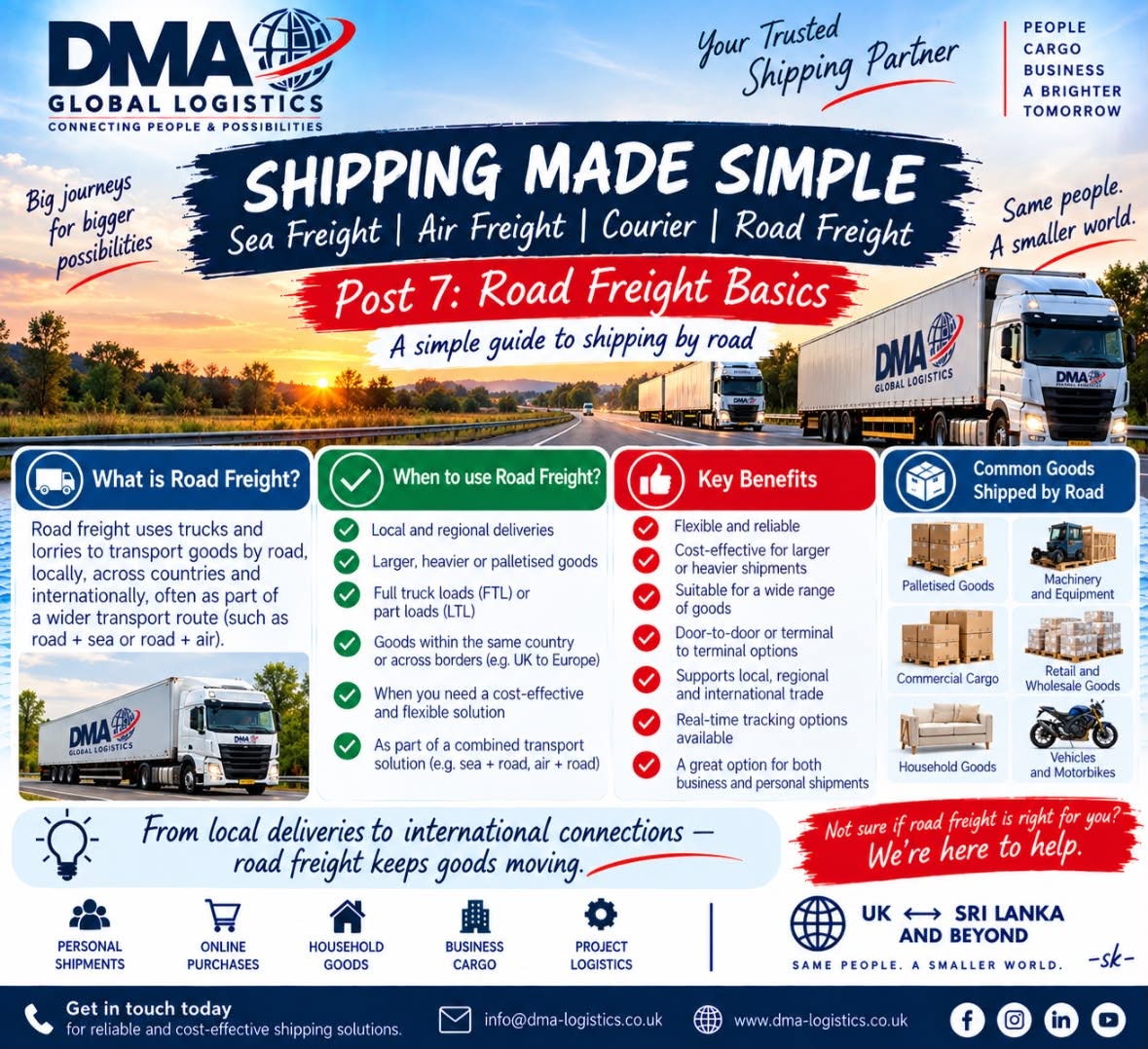
Road freight is the transportation of goods using trucks, lorries and other commercial road vehicles. It plays an important role in local deliveries, nationwide distribution and cross-border cargo movements.
For international shipments, road freight often forms part of a wider journey, connecting suppliers, warehouses, airports, ports and final destinations. A shipment between the UK and Sri Lanka, for example, may involve road collection in the UK, sea or air transport, and road delivery in Sri Lanka.
When Should You Use Road Freight?
Road freight can be a practical choice for many cargo types and delivery requirements.
Key Benefits of Road Freight
Flexible Routing
Road vehicles can reach many business premises, warehouses and delivery addresses without a fixed rail or air terminal.
Cost-Effective for Many Loads
For suitable routes and cargo sizes, road transport may offer competitive costs, particularly for heavier or consolidated shipments.
Wide Cargo Compatibility
Road freight can handle various boxed, palletised, commercial and household goods, subject to vehicle suitability and regulations.
Door-to-Door Options
Collection and delivery at specified addresses may reduce the need for additional handling.
Connects Other Freight Modes
Trucks link warehouses and businesses with seaports, airports and distribution centres.
Visibility and Tracking
Shipment updates or vehicle tracking may be available depending on the provider and service.
FTL vs LTL Road Freight
The best option depends on how much cargo you have, its dimensions and delivery needs.
Full Truckload (FTL)
A truck or trailer is dedicated to one shipment.
- Often suitable for larger volumes
- Useful for full-load commercial movements
- Fewer cargo consolidation steps may be required
- Pricing depends on vehicle, route and requirements
Less Than Truckload (LTL)
Your shipment shares vehicle space with other cargo.
- Suited to smaller freight consignments
- Can avoid paying for a whole truck
- May involve consolidation and transfers
- Transit times depend on the distribution network
What Goods Are Shipped by Road?
📦 Palletised Goods
Boxed products and securely wrapped pallets for wholesale or distribution.
⚙ Machinery & Equipment
Eligible tools, equipment and industrial components with appropriate loading arrangements.
🏬 Commercial Cargo
Business stock, supplies and goods for retailers or workplaces.
🛒 Retail & Wholesale Goods
Products moving between manufacturers, warehouses and shops.
🏠 Household Goods
Furniture, boxed belongings and other properly packaged household items.
🏍 Vehicles & Motorbikes
Eligible vehicles and motorcycles using suitable transport equipment and documentation.
Please note: Acceptance depends on the cargo, route, vehicle and applicable laws. Dangerous, oversized, temperature-controlled or otherwise regulated goods may require specialist arrangements.
Things to Consider Before Booking
Measure Your Shipment
Provide the number of pallets or packages, dimensions, total weight and any unusual loading requirements.
Check Vehicle Access
Confirm loading facilities, opening hours, parking or access restrictions at collection and delivery points.
Protect Your Cargo
Use suitable cartons, pallets, straps or protective materials to secure goods for handling and transport.
Allow for Delays
Road conditions, border procedures and customs requirements can affect timing on international routes.
How Road Freight Works With Sea and Air Freight
Road transport is frequently the first and last step of an international shipment. A typical UK to Sri Lanka cargo journey may follow this process:
- Collection: A road vehicle collects goods from the sender or warehouse in the UK.
- Export transfer: The cargo is delivered to a port or airport for the international leg.
- International transport: The shipment travels by sea or air to Sri Lanka.
- Import clearance: Required customs and handling procedures take place.
- Final delivery: A suitable road vehicle transports the cleared cargo to the destination where that service is arranged.
What Information Does DMA Need?
Share the following information so our team can discuss an appropriate shipping arrangement:
- Type and description of goods
- Number of boxes or pallets
- Approximate total weight and package dimensions
- Collection and delivery locations
- Preferred collection or delivery dates
- Any special handling or loading requirements
Need Help With Road Freight?
DMA Logistics can help you discuss suitable cargo collection, forwarding and delivery arrangements as part of your shipping needs from the UK to Sri Lanka and beyond. Contact our team to explore available options and get a quotation.